


3D Visualization in Architecture: Selling Spaces That Don’t Exist Yet
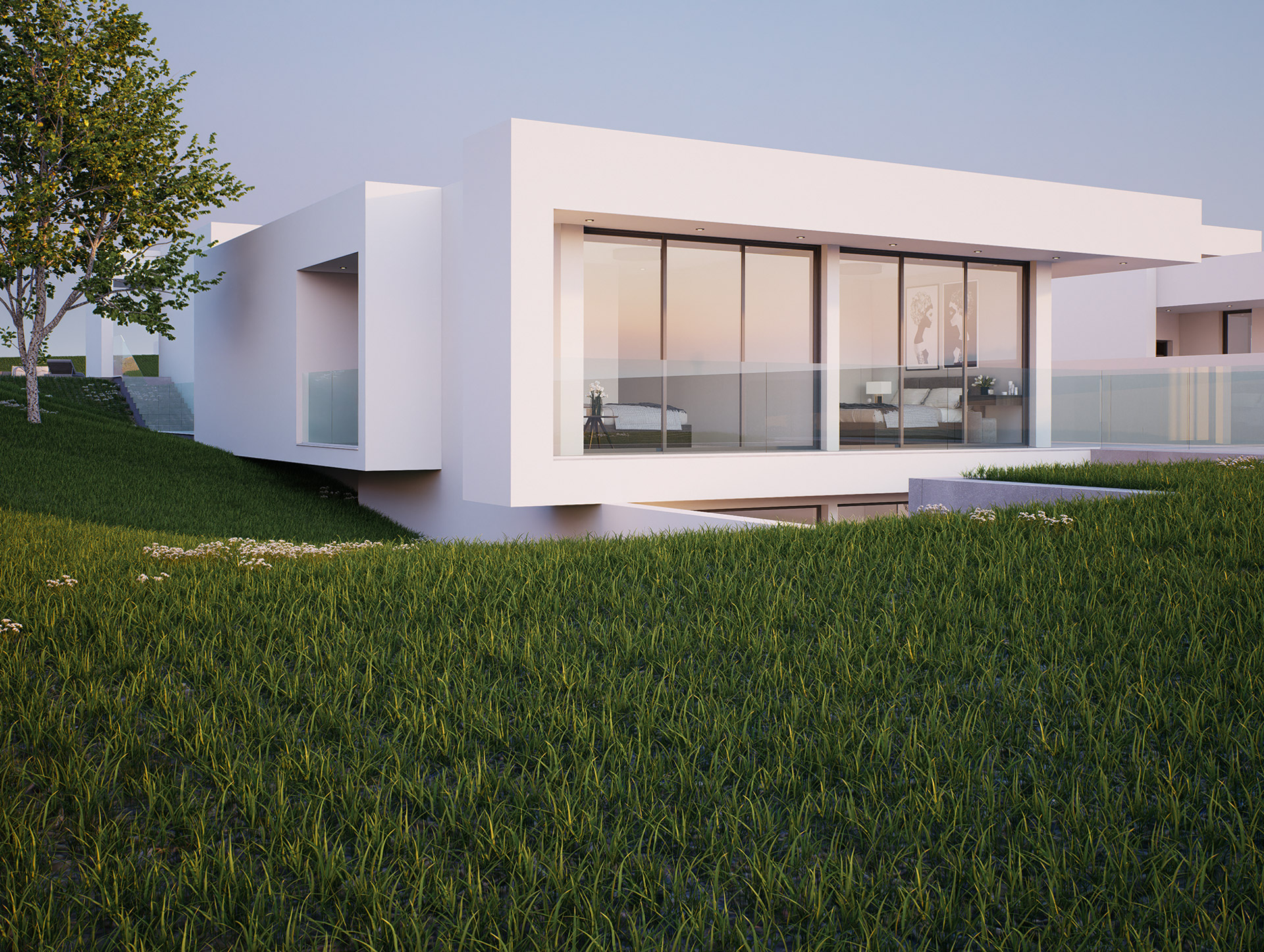
One of the most fascinating challenges in creative communication is this: how do you make someone fall in love with a place that hasn’t been built yet?
This is the challenge at the heart of architectural visualization, and it’s a challenge we find deeply compelling at YNB. When a property developer or architect needs to market a project that exists only as technical drawings and floor plans, 3D visualization becomes the bridge between concept and experience. Done well, it allows potential buyers to feel the light in a room, sense the proportions of a space, and imagine their life within walls that haven’t been erected.
The technical demands of architectural 3D visualization are significant. Creating photorealistic renders requires precise modelling of geometry, materials, lighting, and atmosphere. The marble on a kitchen counter needs to look like marble — with the right veining, the right reflectivity, the right warmth. The sunlight entering through a window needs to behave as real sunlight does — casting accurate shadows, creating the right colour temperature, illuminating dust particles in the air. The landscaping visible through a terrace needs to feel alive rather than like a digital wallpaper. Every surface, every texture, every reflection must be convincing, because the human eye is extraordinarily sensitive to anything that feels artificial.
But photorealism alone isn’t enough. The real art of architectural visualization lies in storytelling. A technically perfect render of an empty room is impressive but emotionally inert. What sells a space is the suggestion of life — a book open on a table, a coffee cup catching the morning light, a view framed by curtains that seem to move gently. These details transform a render from a technical document into an emotional experience. They help potential buyers project themselves into the space, which is ultimately what makes them decide to invest.
Our work with Verdizela A&B Residences illustrates this principle. The project required visualizations that communicated not just the architecture of the residences but their character — the feeling of luxury, comfort, and connection with the surrounding landscape. We developed detailed 3D models that captured both the grand design gestures and the intimate details: the quality of the finishes, the play of natural light through the day, the relationship between indoor and outdoor spaces. The result was a set of visual materials that allowed the development team to present the project with confidence and emotional impact, long before construction reached a stage where photography was possible.
Beyond still renders, architectural visualization now encompasses interactive experiences that fundamentally change how spaces are presented and sold. Three-hundred-and-sixty-degree panoramas allow viewers to explore a space at their own pace, looking in any direction, getting a genuine sense of spatial relationships. Virtual tours take this further, allowing navigation between rooms and floors. Augmented reality overlays allow potential buyers to stand on an empty plot and see the finished building through their device screen. These technologies are no longer experimental novelties — they are increasingly expected by buyers in the premium market.
At YNB, we approach architectural visualization as we approach all our work: as a communication challenge, not just a technical one. The question is never simply how to make something look realistic. The question is how to make someone feel something about a space that doesn’t yet exist — how to create desire, confidence, and emotional connection through imagery alone.
That’s what architectural visualization, at its best, achieves. It doesn’t just show you a building. It shows you a life.